Unleashing Flavor in Typography: The Strategic Power of Holly Cheese
In the visual landscape of modern branding, typography serves as more than just a vessel for information; it is the primary conveyor of tone, atmosphere, and appetite appeal. When a potential customer glances at a menu board or a promotional flyer, the font choice subconsciously dictates their expectations regarding the quality, price point, and personality of the establishment. Among the myriad of typefaces available, Holly Cheese has emerged as a distinctive tool for designers seeking to inject immediate warmth, playfulness, and culinary allure into their projects. This unique display font bridges the gap between professional legibility and whimsical character, making it an essential asset for businesses aiming to stand out in the crowded food and beverage sector.
The Psychology of "Cheezy" Aesthetics in Branding
To understand the utility of Holly Cheese, one must first appreciate the psychological impact of rounded, organic typography in the context of dining. Human beings associate soft, bubbling shapes with comfort, warmth, and indulgence. Sharp, geometric sans-serifs often communicate efficiency and modernity, while traditional serifs suggest heritage and formality. However, there is a specific niche that requires a visual language screaming "fun" and "delicious." This is where the characteristics of Holly Cheese shine.
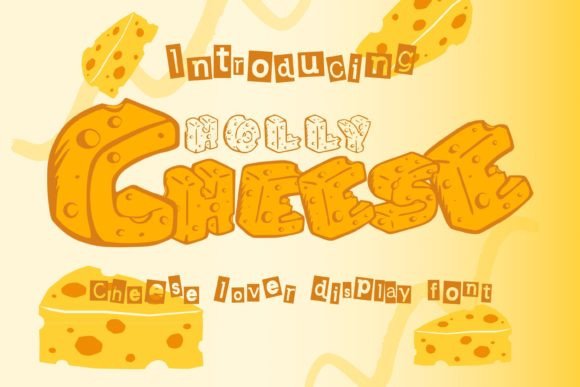
The font's design mimics the fluidity of melted cheese, featuring inflated strokes and irregular contours that evoke a sense of handmade craftsmanship. This "cheezy" look is not merely a gimmick; it is a strategic design choice that lowers barriers to entry for customers. It signals that the dining experience will be relaxed, unpretentious, and focused on enjoyment. For restaurant owners and marketers, leveraging this aesthetic can transform a standard menu into an invitation to indulge. The typeface effectively communicates that the food served is hearty, flavorful, and prepared with a touch of joy, aligning perfectly with concepts like pizzerias, burger joints, fondue bars, and casual diners.
Core Characteristics and Technical Versatility
While Holly Cheese is undeniably stylized, its effectiveness lies in its balance between distinctiveness and readability. A common pitfall of display fonts is that they become illegible when scaled down or used in long paragraphs. Holly Cheese avoids this trap through careful kerning and substantial x-heights, ensuring that even at smaller sizes, the letters remain distinct. The glyphs possess a bouncy rhythm that guides the eye naturally across the line, preventing the text from feeling static or boring.
From a technical standpoint, this font offers remarkable versatility for various media formats. Whether rendered in high-resolution vector graphics for large-scale outdoor signage or rasterized for digital social media posts, the integrity of the letterforms remains intact. The weight of the strokes provides excellent contrast against both light and dark backgrounds, allowing designers to experiment with vibrant color palettes typical of the food industry—think fiery reds, sunny yellows, and fresh greens. Furthermore, the font supports a comprehensive character set, including numerals and punctuation, which is critical for pricing lists, dates on flyers, and contact information on stickers.
Practical Applications Across the Hospitality Industry
The true value of any typeface is measured by its application in real-world scenarios. Holly Cheese finds its natural habitat in environments where energy and flavor are the selling points. Below are several key areas where this font transforms ordinary designs into engaging visual experiences.
- Restaurant Menus and Dining Boards: The most obvious application is in menu design. Using Holly Cheese for section headers like "Starters," "Mains," or "Specials" instantly categorizes the offerings with a playful tone. For digital dining boards found in fast-casual chains, the bold nature of the font ensures readability from a distance, while the fun aesthetic encourages impulse buys.
- Promotional Flyers and Posters: When advertising a weekend special, a new menu launch, or a holiday event, the goal is to grab attention quickly. Flyers utilizing Holly Cheese stand out in a sea of generic corporate typography. The font's inherent personality makes the promotion feel exclusive and exciting, rather than a standard corporate announcement.
- Packaging and Stickers: In the era of takeout and delivery, packaging is a mobile billboard. Stickers sealing a pizza box or labeling a jar of house-made sauce benefit immensely from this typeface. It adds a layer of brand identity that feels personal and artisanal, encouraging customers to share photos of their food on social media.
- Merchandise and Apparel: Many successful food brands extend their reach through merchandise. T-shirts, tote bags, and aprons featuring slogans in Holly Cheese turn customers into brand ambassadors. The font's stylish yet approachable look makes it wearable fashion, not just a uniform.
Enhancing Digital Presence and Social Media
Beyond physical print, the digital realm offers fertile ground for Holly Cheese. Social media platforms like Instagram and TikTok rely heavily on visual storytelling. Food bloggers, influencers, and restaurant marketing teams can use this font to create overlay text on videos, story highlights, and post captions. The "hot" and trendy vibe of the font aligns perfectly with current social media aesthetics that favor authenticity and bold statements. When used in video thumbnails or story graphics, it increases click-through rates by promising content that is entertaining and visually satisfying.
Moreover, web designers can integrate Holly Cheese into landing pages for food festivals, cooking classes, or recipe blogs. Used sparingly for call-to-action buttons or hero headlines, it breaks the monotony of standard web fonts and creates a memorable user experience. However, it is crucial to maintain a hierarchy; while Holly Cheese excels as a display font, body text should generally remain in a neutral, highly readable typeface to ensure accessibility and ease of reading for longer articles or terms and conditions.
Strategic Considerations for Designers and Business Owners
While the advantages of Holly Cheese are numerous, effective implementation requires a nuanced understanding of context. Not every brand benefits from a "cheezy" look. High-end fine dining establishments, corporate cafeterias, or health-focused juice bars aiming for a clinical, minimalist image might find this font too informal. The key is brand alignment. If the brand voice is sophisticated, serious, or strictly utilitarian, Holly Cheese may create cognitive dissonance for the consumer.
However, for the vast majority of casual dining, street food vendors, bakeries, and family-oriented eateries, the fit is often perfect. Designers should consider pairing Holly Cheese with complementary fonts. A clean, geometric sans-serif works well for body copy to provide a stable foundation for the bubbly headlines. Alternatively, a handwritten script can enhance the artisanal feel if the goal is to emphasize homemade qualities. Color theory also plays a pivotal role; warm colors amplify the appetizing nature of the font, while cool blues or grays might mute its energetic potential unless used for specific stylistic contrast.
The Role of Typography in Consumer Behavior
Research in consumer psychology suggests that typography influences perception of taste and value. A study published in the journal Food Quality and Preference indicated that rounder fonts are often associated with sweeter tastes, while angular fonts are linked to sourness or bitterness. By utilizing Holly Cheese, businesses can subtly prime customers to expect richer, more comforting flavors before they even take a bite. This subconscious priming can enhance the overall dining experience, making the food taste better simply because the visual presentation aligns with the flavor profile.
Furthermore, in a competitive market, differentiation is survival. Generic fonts make a brand forgettable. A unique typographic identity helps a business carve out a mental space in the consumer's mind. When a customer sees a specific style of lettering on a poster, they should immediately recall the taste of the burger or the warmth of the pizza associated with it. Holly Cheese facilitates this association by being distinct enough to be recognizable yet universal enough to be understood by a broad audience.
Implementation Workflows for Maximum Impact
Integrating Holly Cheese into a design workflow is straightforward but requires attention to detail. For print projects, designers should ensure that the file resolution is sufficient to capture the smooth curves of the letters without pixelation. Vector formats are preferred for scalability. When preparing files for large format printing, such as vinyl decals for windows or massive outdoor banners, checking the stroke width is essential to prevent thinning or breaking of the characters during the cutting process.
For digital workflows, web font optimization is key. Ensuring that the font loads quickly on mobile devices prevents layout shifts that could frustrate users. Designers should also test the legibility of Holly Cheese on various screen sizes, particularly on smartphones where space is limited. It may be necessary to adjust line height and letter spacing to maintain the font's characteristic bounce without causing lines to overlap.
Educators and students in graphic design programs can also benefit from studying Holly Cheese as a case study in thematic typography. Analyzing how the shape of the letters conveys meaning provides valuable lessons in semiotics and visual communication. It serves as an excellent example of how form follows function, where the "function" is to evoke hunger and happiness.
Future Trends in Display Typography
The trajectory of design trends continues to favor personality-driven typography. As consumers become increasingly desensitized to polished, corporate aesthetics, there is a growing demand for visuals that feel human, imperfect, and joyful. Fonts like Holly Cheese are at the forefront of this movement. They represent a shift away from sterile minimalism toward maximalist expression and emotional connection. We can expect to see this style evolve, perhaps incorporating more dynamic variations or animated elements for digital screens, further blurring the line between static text and moving imagery.
In conclusion, the strategic deployment of Holly Cheese offers a powerful way to communicate brand values instantly. It is more than just a collection of letters; it is a design tool that encapsulates the spirit of fun, heat, and deliciousness. Whether adorning a local pizzeria's window, headlining a food festival brochure, or animating a social media story, this font delivers a consistent message of enjoyment. For professionals, creators, and business owners looking to add a splash of flavor to their visual identity, Holly Cheese provides the perfect typographic ingredient to make their brand truly memorable.